Most people don’t struggle with effort when they start trading. They struggle with direction. You open an account with one of many brokers, install MetaTrader, and suddenly you are expected to make decisions in a market that moves faster than you can process. You read strategies, watch videos, follow signals, and still feel like you are missing something. The issue is not information. It is structure. This is where a social trading platform changes the experience completely, because it replaces isolated decision-making with a system where you can observe, follow, and gradually understand how trading actually works.
Social trading, in simple terms, is built around shared activity. Instead of every trader operating alone, trades, strategies, and performance are visible within a community. You are able to follow expert traders and, if you choose, copy their trades directly into your own accounts. This is what makes copy trading forex different from traditional approaches. You are not just reading about a strategy. You are watching it unfold in real time and seeing how positions open, how they are managed, and how they close under different market conditions.
The concept itself is straightforward, but the impact is significant. When you connect your account to a provider, their trades are mirrored automatically through integrated brokerage technology. If they open a position, your account reflects that same trade. If they close it, your trade closes as well. This entire process runs through platforms like trading MetaTrader 4 or MetaTrader 5, where execution needs to be accurate and synchronized. From the outside, it looks simple. Behind the scenes, it relies on systems that ensure trades are copied without delay or mismatch.
Why Social Trading Makes Sense for New Investors
For most investors entering the forex market, the biggest challenge is not access. It is understanding what to do once they are inside. Traditional trading expects you to develop strategies, manage trades, and control risk from the beginning, which often leads to confusion and inconsistent results. Social trading offers a different entry point, one that is based on observation rather than immediate decision-making.
Instead of creating a trading strategy from scratch, you start by watching how experienced traders actually operate. You see how they react to trading signals, how they structure trades, and how they handle losses. Over time, this helps you build a more practical market understanding. It is not about copying blindly. It is about learning through exposure to real strategies that are already in motion. This is why many consider social trading a learning environment as much as it is a trading solution.
There is also an important psychological shift that happens. Trading alone often leads to overthinking and emotional decisions. You’ll find direction when you’re part of a social trading environment. You are able to compare different strategies, observe how providers perform, and make decisions based on data rather than assumptions. That context helps investors approach the market with more clarity and less randomness.
How Copy Trading Works Step by Step
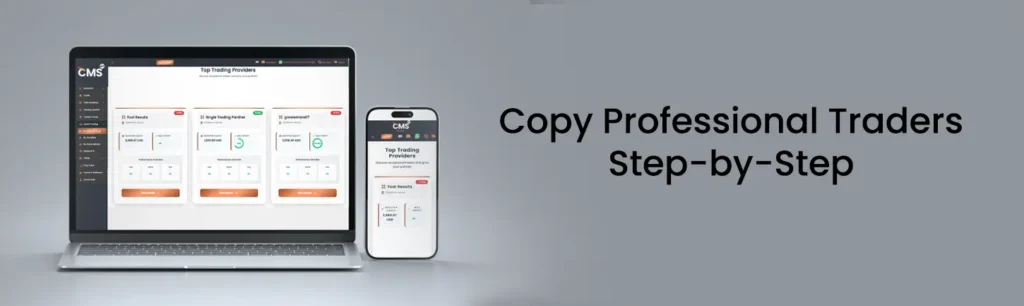
The process of copy trading follows a clear structure, but it requires attention at every stage. After opening an account with a company that offers a social trading platform, you gain access to a list of signal providers. Each provider has a track record that includes their trades, performance history, and risk levels. Here’s where most folks make their biggest mistake – they’re focusing only on high returns without understanding how those returns were actually achieved.
It’s better to slow down and evaluate things properly. Read the data. Watch how trades behave over time. Pay attention to how strategies perform during volatile periods. These details reveal far more than a simple percentage gain. Once you select a provider, you decide how much capital you want to allocate. This is part of your investment management and should never be rushed.
After the allocation is set, the system begins to copy trades automatically. Every trade placed by the provider is reflected in your account. You can monitor these trades in real time, track performance, and make adjustments when necessary. You’re not locked into one single strategy. You can stop copying, switch providers, or diversify across many strategies depending on your approach. This flexibility is what makes copy trading a structured solution rather than a fixed system.
The Role of Technology and Execution
The entire system depends on reliable technology. Without it, social trading would not function correctly. Trades must be executed simultaneously across various accounts, and even tiny delays can create differences in the results you get. That’s why brokerage technology and platform integration are critical parts of the process.
Platforms built around MetaTrader or MetaTrader cTrader provide the infrastructure needed for execution, charting, and account management. On top of that, social trading layers connect accounts and allow trades to be shared between providers and investors. Some platforms also include a ratings module, which helps users compare signal providers based on performance, risk, and consistency. These tools make it easier to evaluate different strategies and choose providers based on actual data rather than assumptions.
From the user’s perspective, everything appears simple. You connect to a provider, allocate funds, and watch trades unfold. In reality, there is a complex system ensuring That’s the reliability that lets social trading work as a real trading solution instead of just an idea.
Choosing the Right Providers and Managing Risk
Selecting the right providers is one of the most important decisions in social trading. Most people focus on quick gains and don’t consider how consistent performance matters. A provider who delivers high returns in a short period may also be taking high levels of risk, which can lead to significant losses later. A more stable approach is to look for providers who demonstrate consistent performance over time with controlled drawdowns.
Risk management remains your responsibility, even when you are copying trades. You’ll need to decide how much capital you’re allocating, whether you’ll follow multiple providers, and when to stop copying strategies that aren’t performing well. Some investors prefer to diversify across different strategies to reduce exposure, while others focus on a single provider but monitor performance closely. There isn’t one universal answer, but ignoring risk is where most problems start.
It’s also important to understand that strategies don’t behave the same. Some react quickly to short-term signals, while others don’t and take longer-term approaches. Knowing these differences helps you match your choices with your own investing goals. This is where you’re reading data, watching trades, and staying engaged matters.
CMS Prime Social Trading Platform
The CMS Prime Social Trading Platform provides a structured environment where traders and investors can connect, evaluate, and act based on real data. The platform’s designed to give users access to signal providers while they’re maintaining control over their accounts. You can review strategies, compare performance, and decide how to allocate your investment based on your own criteria.
Integration with MetaTrader ensures that trades are executed accurately, while the platform allows you to monitor activity, adjust allocations, and manage risk effectively. Users can join a network where you’re able to see strategies, transparent performance, and data-supported decisions. This creates a balanced environment where access and control work together.
If you want to understand how the platform works in more detail, you can explore it here:
CMS Prime Social Trading Platform
Final Thoughts
Social trading works because it replaces randomness with structure. Instead of building strategies without experience, you can watch how real traders work, follow their choices, and learn from actual market moves. This makes the whole process way more practical and realistic.
At the same time, it isn’t a passive system. You still need to manage your accounts, monitor performance, and adjust your approach over time. The platform provides the tools, but the responsibility remains with you. If you’re patient and pay attention, social trading It’s a way you’ll understand how trading works, step by step, through real strategies and real decisions.

